Showing posts with label AMAIC. Show all posts

Wednesday, May 13, 2020

Pope invites everyone to pray on 14 May for end to pandemic

Wednesday, May 13, 2020


Pope Francis renews his invitation for people of all faiths to unite in prayer, fasting, and works of charity on Thursday for an end to the Covid-19 pandemic.

By Vatican News

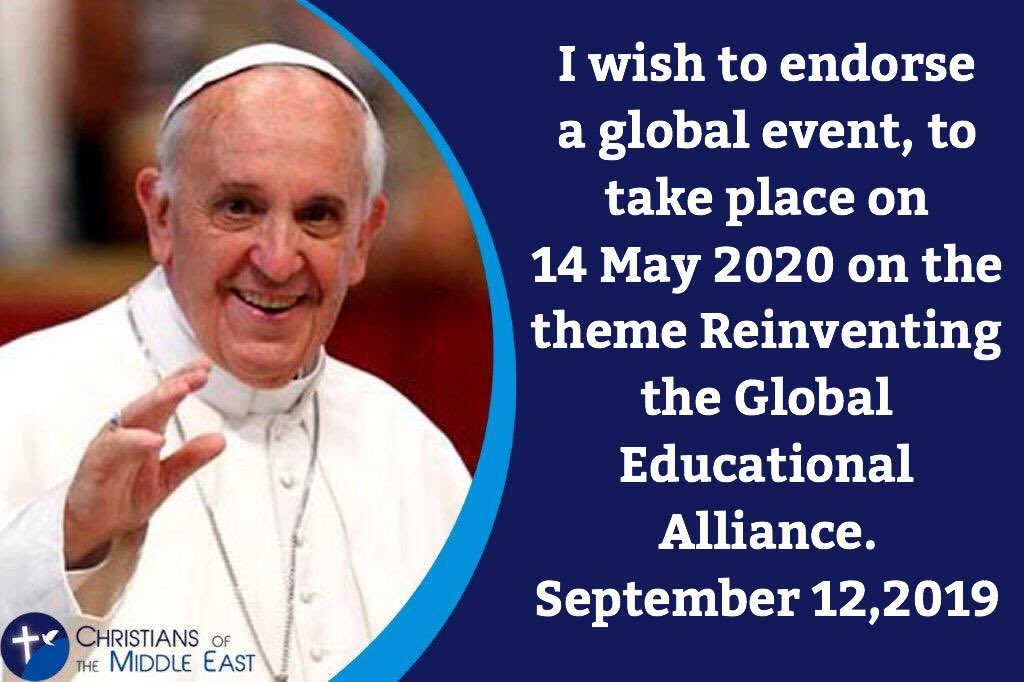
At the weekly General Audience, Pope Francis appealed for the Day of Prayer on 14 May launched by the Higher Committee of Human Fraternity.

“Prayer is a means to communicate with and listen to God. In this spirit, I have welcomed the invitation of the Higher Committee of Human Fraternity to dedicate tomorrow, 14 May, to prayer, fasting, and works of charity. I invite and encourage everyone to join in this event. May we unite as brothers and sisters in asking the Lord to save humanity from the pandemic, to enlighten scientists, and to heal the sick. May the Lord bless each one of you, and always protect you from every evil.”

...

https://www.vaticannews.va/en/pope/news/2020-05/pope-francis-invitation-to-14-may-prayer.html

Thursday, April 23, 2020

Pope at Mass: May Europe be united in dream of the Founding Fathers

1 Corinthians 2:8 The Wisdom Of The Cross (brown)

Pope Francis prays at Mass on Wednesday for Europe to show unity in response to the Covid-19 crisis, and reflects on the depth of God’s love for us. (Playback included)


By Devin Watkins

As he began Mass in the Casa Santa Marta on Wednesday morning, Pope Francis urged all nations to be united as they face the Covid-19 pandemic. He prayed especially for Europe.
“At this moment in which unity is very necessary between ourselves and between nations, we pray today for Europe, so that Europe might succeed in creating this fraternal unity dreamt of by the founding fathers of the European Union.”

God loves us madly

In his homily, the Pope reflected on Jesus’ words to Nicodemus in the day’s Gospel (Jn 3:16-21): “God so loved the world that he gave his only-begotten Son, so that everyone who believes in him might not perish but might have eternal life.”
Pope Francis said this passage contains a wealth of theological revelation about Redemption.
He focused his attention on two aspects: the revelation of God’s love and the existential choice between light and darkness.
“God loves us,” said the Pope. “He loves us madly. As one saint used to say, God’s love seems like madness.”
Listen to our report

Cross contains all Christian wisdom

The cross, said Pope Francis, is the highest expression of this love. He added that everything is revealed to those who contemplate the cross.
"So many people, so many Christians, pass time gazing at the Crucified... And there they find everything because they have understood. The Holy Spirit teaches them that therein lies all science, all of God’s love, and all Christian wisdom. Saint Paul speaks about this, explaining that all human reasoning is useful only up to a certain point. But true reasoning – the most beautiful way of thinking which also explains everything – is the cross of Christ, is Christ crucified, who is scandal and madness. But He is the way. And this is the love of God. God so loved the world that He gave His only-begotten Son. Why? So that everyone who believes in Him might not perish but might have eternal life. This is the love of the Father who wants His children with Him."

Light over darkness

Pope Francis then reflected on the choice between light and darkness. He said there are some people – “including us sometimes” – who are unable to live in the light, because they have become accustomed to darkness.
“Light blinds them and they cannot see. They are like human bats: they can only move about during the night. We ourselves, when we are in a state of sin, find ourselves in this condition, unable to tolerate the light. It is easier to live in the darkness; light slaps us on the face and shows us what we don’t want to see.”

Corruption blinds

Though it is difficult to face what the light reveals to us, said Pope Francis, it is worse when the eyes of the soul become ignorant of the light.
“So many human scandals and corruption teach us this. Those who are corrupt do not know what the light is, and don’t recognize it.”

Child of God… Or bat?

Pope Francis concluded inviting us to let the light of God’s love shine in our lives through the Holy Spirit. And we can ask ourselves:
“Do I walk in the light or in darkness? Am I a child of God? Or have I ended up like a bat?”

[youtube https://www.youtube.com/watch?v=Ol6rVYoFY8k?wmode=opaque&rel=0&autohide=1&showinfo=0&wmode=transparent&modestbranding=1&enablejsapi=1&origin=https://www.vaticannews.va&start=&end=]
Full video of Pope's Mass

https://www.vaticannews.va/en/pope-francis/mass-casa-santa-marta/2020-04/pope-francis-mass-european-fraternal-unity.html

Saturday, April 18, 2020

Pope to celebrate Divine Mercy Sunday in Rome church


This year, the feast of Divine Mercy, which is celebrated on the Sunday after Easter, turns 20. Pope Francis will mark it on Sunday with a Holy Mass at the Church of the Holy Spirit in Sassia, the centre of the devotion to Divine Mercy in Rome.
  
By Robin Gomes

Some 200 meters from St. Peter’s Square is the Church of the Holy Spirit, the sanctuary and centre of the devotion to Divine Mercy in Rome, where Pope Francis will mark Divine Mercy Sunday, April 19. The Mass that will be streamed and televised live, will have only a handful of faithful because of the coronavirus lockdown in Italy and the Vatican.

Saints Faustina and John Paul II

The devotion to Divine Mercy was popularized by the 20th-century Polish nun, Saint Faustina Kowalska, as requested to her by Jesus in visions and conversations..
Saint Pope John Paul II instituted Divine Mercy Sunday on the occasion of the canonization of St. Faustina, April 30, 2000, the Second Sunday after Easter, thus opening the devotion and the feast of Divine Mercy to the Universal Church.
From his early years, Pope John Paul II had an ardent devotion to Divine Mercy, as promoted by Sister Faustina, who died in 1938 at the age of 33 in Krakow, where Karol Wojtyla was to become archbishop, cardinal and was later elected Pope in 1978.
Pope John Paul II who beatified Sister Faustina on April 18, 1993, Sunday after Easter, died on April 2, 2005, the eve of the Sunday after Easter.
John Paul II himself was beatified on May 1, 2011, Divine Mercy Sunday, and declared a saint on April 27, 2014, also Divine Mercy Sunday.
In an Apostolic Letter issued on the occasion of Divine Mercy Sunday, April 7, 2002, Pope John Paul II granted indulgences to Catholics who go to confession, receive Communion and recite specific prayers on that day.  Subsequently,  this was formally decreed by the Apostolic Penitentiary.

Popes John Paul II and Francis

During his general audience live-streamed on Wednesday, Pope Francis told Polish pilgrims that on Sunday, April 19, he will celebrate the feast of Divine Mercy, established by St. John Paul II, in response to the “the request of the Lord Jesus to St. Faustina”. “Jesus said: ‘I desire that the Feast of Mercy be a refuge and shelter for all souls.’ Mankind will not have peace until it turns with trust to My Mercy.”
The Holy Father urged that prayers be said with “confidence to Merciful Jesus for the Church and for all humanity, especially for those who suffer in this very difficult time”.
Divine Mercy is certainly a strong, common bond between the Popes John Paul II and Francis. “Dives in Misericordia” (Rich in Mercy), the 1980 encyclical of the Polish Pope is often cited by Pope Francis, the hallmark of whose pontificate has been mercy.
In this regard, we particularly recall the Extraordinary Jubilee of Mercy that Pope Francis called from December 8, 2015, to November 20, 2016.
Both the pontiffs are known for their sensitivity to human dignity, poverty, disease and suffering, and the need to show mercy.
Pope Francis envisages the Church as a “field hospital” that particularly reaches out to the least, the lost and the last. On the eve of his election, he said that “the Church is called to come out of herself and to go to the peripheries, not only geographically, but also the existential peripheries: the mystery of sin, of pain, of injustice, of ignorance and indifference to religion, of intellectual currents, and of all forms of misery.”
Today, the devotion to Divine Mercy is widespread across the world. Churches and shrines dedicated to Divine Mercy have sprung up across the world, most importantly the Divine Mercy Shrine in Krakow, which houses the remains of Saint Faustina. Built between 1999–2002, the sanctuary has been visited by 3 popes. Millions of pilgrims from around the world visit it every year.
https://www.vaticannews.va/en/pope/news/2020-04/pope-francis-divine-mercy-sunday-20-years-holy-spirit-church.html

Friday, April 3, 2020

Pope encourages Catholics to contemplate ‘seven sorrows’ of Mary


Pope encourages Catholics to contemplate ‘seven sorrows’ of Mary
Mary and St. John stand at the foot of cross in this depiction of Christ's crucifixion at Holy Family Church in Ramallah, West Bank. (Credit: Debbie Hill/CNS.)
Cindy Wooden
Apr 3, 2020

ROME - On the Friday before Holy Week, Pope Francis asked people to keep a long tradition of Catholic piety by focusing on “the suffering and sorrows of Our Lady.”
“Honor Our Lady and say, ‘This is my mother,’ because she is mother. This is the title that she received from Jesus precisely there, at the cross,” the pope said at Mass April 3. Jesus “did not make her prime minister or give her ‘functional’ titles. Only ‘mother.'”
Mary did not ask for any honor or special titles, the pope said. “She didn’t ask to be a quasi-redemptrix or a co-redemptrix, no. There is only one redeemer and this title cannot be duplicated.”
For decades, some Catholics have been petitioning the popes to recognize Mary as “co-redemptrix” to highlight the essential role she played in redemption.
“Just disciple and mother - and in that way, as mother, we must think about her, seek her out, pray to her,” Pope Francis said. “She is the mother in the church that is mother. In the maternity of Our Lady, we see the maternity of the church, which receives everyone, good and bad, everyone.”
The Friday before Palm Sunday is observed in many places as the “Friday of Sorrows,” a special day of Marian devotion.
Pope Francis asked Catholics to spend time considering the “seven sorrows” of Mary: Simeon’s prophecy that a sword would pierce her heart; the flight into Egypt; the worry when the child Jesus could not be found because he was in the temple; meeting Jesus on the way to Calvary; seeing Jesus on the cross; witnessing Jesus, lifeless, being taken down from the cross; and seeing Jesus being buried in the tomb.
Mary bore those sufferings “with strength, with tears - it wasn’t a fake cry, hers was truly a heart destroyed by pain,” the pope said.
Pope Francis said that late in the evening, when he prays the Angelus prayer, he contemplates the seven sorrows and recalls “how the mother of the church, with so much pain, gave birth to all of us.”
With the morning Masses from the chapel of the Domus Sanctae Marthae livestreamed during the coronavirus crisis, Pope Francis begins the liturgy with a special thought and prayer intention each day.
“There are people who already are thinking about the ‘after,’ what happens after the pandemic,” the pope said April 3. They already are strategizing ways to alleviate “all the problems that will come - problems of poverty, jobs, hunger. Let us pray for all the people who are helping today, but also thinking of tomorrow to help all of us.”

https://cruxnow.com/vatican/2020/04/pope-encourages-catholics-to-contemplate-seven-sorrows-of-mary/

Thursday, March 12, 2020

Read: Pope Francis’s prayer to Mary during coronavirus pandemic


Pope Francis asks Mary's protection for Rome against coronavirus


          O Mary,
you always shine on our path
as a sign of salvation and of hope.
We entrust ourselves to you, Health of the Sick,
who at the cross took part in Jesus' pain, keeping your faith firm.
You, Salvation of the Roman People,
know what we need,
and we are sure you will provide
so that, as in Cana of Galilee,
we may return to joy and to feasting
after this time of trial.
Help us, Mother of Divine Love,
to conform to the will of the Father
and to do as we are told by Jesus,
who has taken upon himself our sufferings
and carried our sorrows
to lead us, through the cross,
to the joy of the resurrection. Amen.
Under your protection, we seek refuge, Holy Mother of God. Do not disdain the entreaties of we who are in trial, but deliver us from every danger, O glorious and blessed Virgin.
https://www.americamagazine.org/faith/2020/03/11/read-pope-francis-prayer-mary-coronavirus-pandemic 

Saturday, December 7, 2019

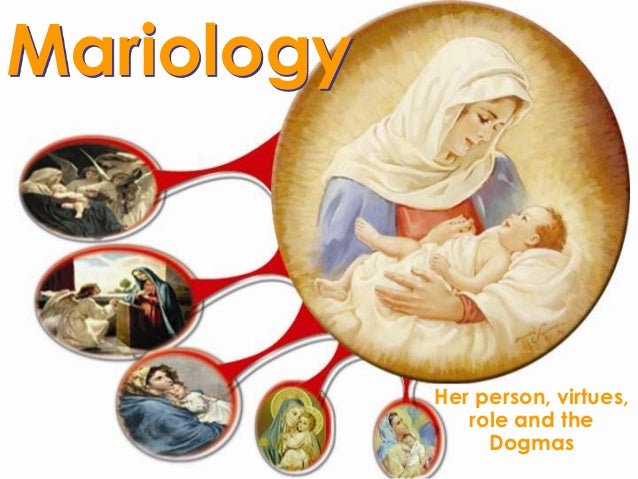
Pope: Mariology helps foster dialogue and fraternity among cultures


Image result for mariology


Pope Francis sends a message to the XXIV public session of the Pontifical Academies where the annual Award was presented to Dr. Carme López Calderón and to the Reverend Ionuț-Cătălin Blidar for their commitment to theological research.

By Vatican News
As an introduction to his message, Pope Francis described the Pontifical Academies as places where knowledge becomes service, because - he noted - without knowledge that comes from collaboration and leads to cooperation there is no genuine and integral human development.
An Academy, he said, is a model of synodality and a force for evangelization.
The Pope’s message was addressed to participants in the XXIV Public Session of the seven Pontifical Academies, whose Coordinating Council is presided over by Cardinal Gianfranco Ravasi.
This year’s edition, on the theme “Mary, way to peace among cultures”, was organized by the Pontifical International Marian Academy, which is marking the 60th anniversary of its establishment by Pope Saint John XXIII, on 8 December 1959.

Mary, a teacher of humanity


The Pope reflected on the Marian theme chosen for the edition and reflected briefly on how different popes expressed veneration for Our Lady.
He recalled the dramatic experience of the two world wars that led Pope Pius XII to uphold Mary as a beacon of peace for a frightened humanity.
The Second Vatican Council, he continued, pointed to her as a “teacher of humanity” and a model for the Church in its mission to serve the “deepest aspirations of the human heart”.

Victory of hope over anguish


Pope Saint Paul VI, the Holy Father said, highlighted the bond between the Blessed Virgin and the faithful and said she offers contemporary humanity, oppressed by anguish and loneliness, a serene and reassuring vision: the victory of hope over anguish, of peace over uneasiness.
“She represents the victory of hope over anguish, of communion over loneliness, of peace over upheaval, of joy and beauty over tedium and nausea, of eternal perspectives over temporal ones, of life over death”, he said.

Bringing Mary into the crucial issues of our time


Pope Saint John Paul II, the Pope continued, was firm in his desire that Mariology be acknowledged and upheld in theological formation and in dialogue so it could play its due role in the crucial questions of our time.

Mariology and theology of the Word


Finally, the Pope mentioned the many instances in which Pope Benedict XVI urged scholars to investigate the relationship between Mariology and theology of the Word. In fact, he said, the Pontifical Marian Academy has always accompanied the universal Magisterium of the Church with Mariological input and contribution.
“These commitments are a clear testimony of how Mariology is a necessary presence for dialogue between cultures, and is capable of nourishing fraternity and peace,” he said.
https://www.vaticannews.va/en/pope/news/2019-12/pope-message-public-session-pontifical-academies.html

Wednesday, November 27, 2019

Mary of Nazareth’s Beauty Secret


Image result for mary of nazareth


“There is only one thing that really does grow old: not age, but sin.
Sin makes (us) old, because it fossilizes the heart. It closes it, makes it inert, it makes it fade. But the (woman) full of grace is empty of sin.”
 
Pope Francis


AddThis Sharing Buttons


Vatican City, Dec 8, 2017 / 04:37 am ().- On Friday’s Feast of the Immaculate Conception, Pope Francis offered his own ‘beauty secret’ – with Mary as model – saying beauty does not come from age or appearance, but from living a virtuous life rooted in scripture.
 
The Blessed Virgin Mary, though a simple and humble person, “lived a beautiful life,” the Pope said Dec. 8, asking “what was her secret?”
 
The answer can be found in the story of the Annunciation, he said. “In many paintings, Mary is depicted sitting in front of the angel with a small book. The book is scripture.”
“The Word of God was her secret: close to her heart, it then took flesh within her womb. Remaining with God, dialoguing with Him in every circumstance, Mary made her life beautiful.”
 
In his special Angelus address for the feast day, Pope Francis emphasized that what makes someone’s life beautiful is “not appearance, not what passes, but the heart focused on God.”
 
Francis noted how Mary came from a simple family and lived in a humble fashion in Nazareth, which was an almost unknown village. She was not famous. “Our Lady did not even have a comfortable life,” he said. Yet the angel greets her with the words, “hail, full of grace!”
 
The Church extols the Mother of God as “all beautiful,” or “tota pulchra,” in Latin, the Pope continued. This is because her beauty is not found in her outward appearance, but in her total freedom from sin.
“There is only one thing that really does grow old: not age, but sin,” he emphasized. “Sin makes (us) old, because it fossilizes the heart. It closes it, makes it inert, it makes it fade. But the (woman) full of grace is empty of sin.”
 
Let us ask for her help to remain free of sin, he concluded, so that we too can live a beautiful life, saying “yes,” to God.
 
After reciting the Angelus, Pope Francis noted how later in the afternoon he will visit Rome’s Piazza di Spagna to venerate the statue of the Immaculate Conception overlooking the Spanish Steps.
He asked those gathered to join him spiritually in this act, “which expresses filial devotion to our heavenly Mother.”
The statue of Our Lady, which sits atop a nearly 40-foot-high column, was dedicated Dec. 8, 1857, just a few years after the Catholic Church adopted the doctrine of Mary’s Immaculate Conception. Since the 1950s, it has been a custom for popes to venerate the statue for the Feast of the Immaculate Conception. ….
 
[End of quote]
 
 
O SANCTISSIMA
 
 
O Sanctissima O Piissima (1)
Dulcis Virgo Maria
Mater amta intemerata
Ora ora pro nobis
 
Tota pulchra es O Maria
Et macula non est in te
Mater anmata intemerata
Ora ora pro nobis
 
Sicut lilium inter spinas(2)
Sic Maria inter filias
Mater amata intemerata
Ora ora pro nobis
 
In miseria in angustia
Ora Virgo pro nobis
Pro nobis ora in mortis hora
Ora ora pro nobis
 
Tu solatium et refugium
Virgo Mater Maria
Quidquid optamus
per te speramus (3)
Ora, ora pro nobis


Translation of the Latin 
 
O most holy
O most devoted
Sweet Virgin Mary
Mother with love unswerving
Pray, o pray for us.
 
You are true beauty,
O Mary
And there is no stain of sin in you
Mother with love unswerving
Pray, o pray for us
 
Like the lily among the thorns
So are you O Mary among women(4)
Mother with love unswerving
Pray, o pray for us
 
In our misery and anguish
Pray for us, O Virgin
Pray for us in the hour of our death
Pray, o pray for us 
 
O comfort and refuge
Virgin Mother Mary
Whatever we seek, we aspire to through you
Pray, o pray for us

Thursday, October 24, 2019

Significance of sandals in Book of Ruth and Gospels


The meaning of it is wonderfully explained in the context of the Levirate Law in the article, “Whose Sandal Strap I am Not Worthy to Untie”, to be found at:

http://ourladyofwisdom.org/wp-content/uploads/2011/12/levirate.pdf


The book by the prominent Spanish scripture scholar Luis Alonso-Schokel called I Nomi Dell'Amore (The Names of Love) provides a fascinating and spiritually rich look at marriage symbols in the bible. I’d like to offer a brief summary of some of the insights of the chapter from that book entitled "The Levirate."
 

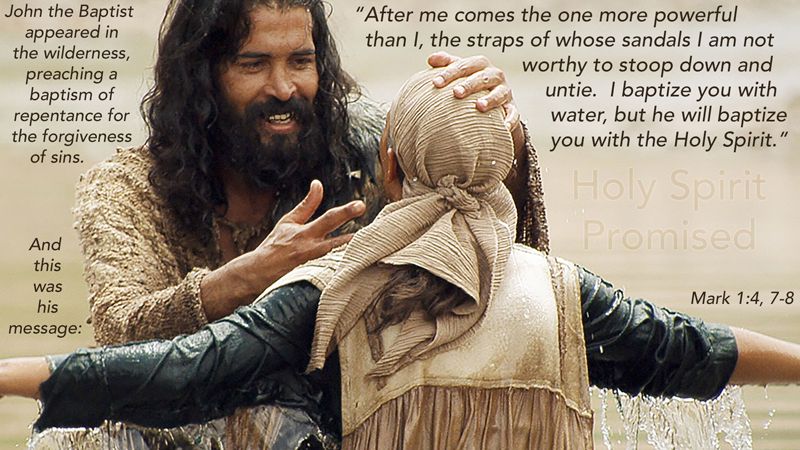
Schokel begins by noticing 5 similar texts from the New Testament all dealing with St. John the Baptist:

Matthew 3:11 he who is coming after me is mightier than I, whose sandals I am not worthy to carry

Mark 1:7 After me comes he who is mightier than I, the thong of whose sandals I am not worthy to stoop down and untie

Luke 3:16 he who is mightier than I is coming, the thong of whose sandals I am not worthy to untie; he will baptize you with the Holy Spirit and with fire.

John 1:27 even he who comes after me, the thong of whose sandal I am not worthy to untie.
 

Acts 13:25 after me one is coming, the sandals of whose feet I am not worthy to untie.

Now any text repeated in all of the gospels (and the book of Acts too) must have a grand significance. Most people will see it as illustrating the humility of the Baptist, unworthy to untie the sandals of the Lord, but several internal hints point to a deeper, more profound answer.

Schokel points out three textual clues:
 

1) In John 1:30 the Baptist speaks of Christ as, "This is he of whom I said, `After me comes a man who ranks before me, for he was before me.'" The word translated as "man" here is not the Greek word "anthropos" usually translated as man, instead it is "aner" a word, as Schokel points out, having more of a "sexual" (in the sense of gender) or relational meaning. It isn't man, but "male" (maschio in Italian); a male in relation to a female. The passage would better be translated in English, "After me comes a male who ranks before me." [John the Baptist is the "anthropos" - see John 1:6, 3:27]. Schokel also points out the references in John 1-3 to Isaiah 40-66, esp. chapter 54:1-10, where Yahweh is referred to as the Bridegroom/husband and in the LXX, the "aner")
 

2) At least in the synoptics the word "unworthy" or "unfit" has a juridical sense. That word is "ikanos" while John uses "axios." So it seems to be more of unfitness according to some type of Judaic law, and with the use of "aner" possibly a marital law.
 

3) Looking a few chapters down, we come to the last words of John recorded in the gospel. In responding to questions as to who this Jesus is, he responds, "You yourselves bear me witness, that I said, I am not the Christ, but I have been sent before him. He who has the bride is the bridegroom; the friend of the bridegroom, who stands and hears him, rejoices greatly at the bridegroom's voice; therefore this joy of mine is now full" (John 3:28-29). John here is challenging Israel's Messianic expectations - they expect their Christ to come as a political leader, or a warrior, or even a prophet like John the Baptist, but John says this is incorrect. He says that the messiah will come as the Bridegroom of his bride Israel; ultimately that Israel has the wrong expectations.
 

So keeping all of this in mind: the repeated reference to untying of sandals, the "maleness" of Christ, the juridical context, and the spousal-messianism John uses to describe the Christ, Schokel (along with the Fathers) exegetes this text in light of the Levirate Law in the Old Testament.
 

The Levirate Law (derived from Latin levir, meaning "a husband's brother") is the name of an ancient custom ordained by Moses, by which, when an Israelite died without issue, his surviving brother was required to marry the widow, so as to continue his brother's family through the son that might be born of that marriage (Gen 38:8; De 25:5-10 ) comp. (Ruth 3:1 4:10) Its object was "to raise up seed to the departed brother."

But if the surviving brother refused (for whatever reason) to marry the widow, a rite called "Halizah" would occur. Deut 25:5-10 describes the Levirate and Halizah:

"If brothers dwell together, and one of them dies and has no offspring, the wife of the dead shall not be married outside the family to a stranger; her husband's brother shall go in to her, and take her as his wife, and perform the duty of a husband's brother to her.

And the first son whom she bears shall succeed to the name of his brother who is dead, that his name may not be blotted out of Israel. And if the man does not wish to take his brother's wife, then his brother's wife shall go up to the gate to the elders, and say, `My husband's brother refuses to perpetuate his brother's name in Israel; he will not perform the duty of a husband's brother to me.' Then the elders of his city shall call him, and speak to him: and if he persists, saying, `I do not wish to take her,' then his brother's wife shall go up to him in the presence of the elders, and pull his sandal off his foot, and spit in his face; and she shall answer and say, `So shall it be done to the man who does not build up his brother's house.' And the name of his house shall be called in Israel, The house of him that had his sandal pulled off" (Deuteronomy 25:5-10).

The sandal is the key - the sandal is symbolic of he who has the right to marriage. The one who wears the sandal is the Bridegroom. As St. Cyprian said, this is why both Moses (Ex 3:2-6) and Joshua (John 5:13-15) were told by Yaweh that they had to remove their sandals; although they might have been prophets, they were not the one who had the right to marry Israel the Bride. In saying that he is not fit (juridically) to remove the sandal from Jesus' foot he is saying that Jesus is the bridegroom, he is the one who has the right to marriage, not John - even though he came first.

"Even though he came first" - John admits to this, being the precursor of the Messiah-Bridegroom, but he is not the one that will marry the bride (as he is not the Messiah, as some of the Jews had thought). To understand this better (and the entire Levirate process) one must look to the book of Ruth. In it, the widow Ruth is set to marry her "next of kin" via the levirate law, but Boaz arrived first to claim Ruth. It does not matter though, the next of kin has first choice. But he decides to pass up the marriage to Ruth, and gives her to Boaz. And in doing so he "drew off his sandal" (Ruth 4:8). Even though John came first, Jesus is the one with the right to the woman, and he opts for the marriage - and thus does not remove his sandal. John will not be given the chance to take his place.

This interpretation of these passages are not new, as Schokel points out. Several of the Fathers, including Jerome, Cyprian, and Gregory all see the Levirate law being referred to in the passages about John the Baptist. As Jerome writes, "being as that Christ is the Bridegroom, John the Baptist is not merited to untie the laces of the bridegroom's sandal, in order that, according to the law of Moses (as seen with Ruth) his house will not be called "the house of the un-sandaled," [a reference to the refusal to carry on the name of the deceased brother].

So, if John is not the messiah-bridegroom, and is unfit to untie the bridegroom's sandals, as the "friend of the groom" - what is his duty, esp. in the Levirate context? The root of his mission "to prepare the way of the Lord" can be found in Ruth 3:3 when the elders tell Ruth before her wedding to "Wash therefore and anoint yourself, and put on your best clothes." John's baptism of repentance is done to prepare the bride for the wedding.

Liturgically, he cleans her from her impurities (see also Ezekiel 16) preparing the bride "that he might sanctify her, having cleansed her by the washing of water with the word" (Ephesians 5:26). To prepare Israel the Bride for her nuptial with Christ her bridegroom is the heart of the Baptist's mission.

Now with all symbolism and typologies, it is hard to "stretch" the analogy too far. But in order to get the full meaning of Christ's fulfillment of the Old Testament, one has to twist symbols around a bit. In order to do understand one other crucial aspect of the Levirate, that of the "deceased" brother, we must be a bit creative, and look at it from a different perspective. Christ marries his bride, consummates his union with her, on the cross (see Eph 5) - but this leads to his death. So he could be seen as the "dead husband." So who will be the "brother" who takes his place in marrying his bride? For the answer we must again turn to the gospel of John.

"When Jesus saw his mother, and the disciple whom he loved standing near, he said to his mother, 'Woman, behold, your son!' Then he said to the disciple, 'Behold, your mother!' And from that hour the disciple took her to his own home" (John 19:26-27).

Jesus had no other brothers, so he gave his mother to John - and thus in becoming her son, John (and all apostles and Christians likewise) became Jesus' brother. But we cannot forget that on a different level (see Rev 12) Mary is the "icon of the church," the bride - so John as he becomes Jesus' brother, is given to the Church as her bridegroom. Here we have what Schokel says might be seen as the "root of apostolic succession." The Church is passed on from brother/apostle to brother/apostle - yet the bride still keeps the name of her first husband, as Paul writes, "Is Christ divided? Was Paul crucified for you? Or were you baptized in the name of Paul?" (1 Corinthians 1:13). The name of the husband is carried on by the generation of new sons, thus the brother through his preaching of the word, causes the bride to become fruitful. Look to St. Paul (a Jew well versed in the Law) again, "For though you have countless guides in Christ, you do not have many fathers.

For I became your father in Christ Jesus through the gospel" (1 Corinthians 4:15). The bishops/apostles have their charge to carry on the name of Christ by preaching the gospel and celebrating the sacraments - and in doing so the church/bride becomes church/mother and the Levirate law is thus fulfilled in Jesus Christ.